
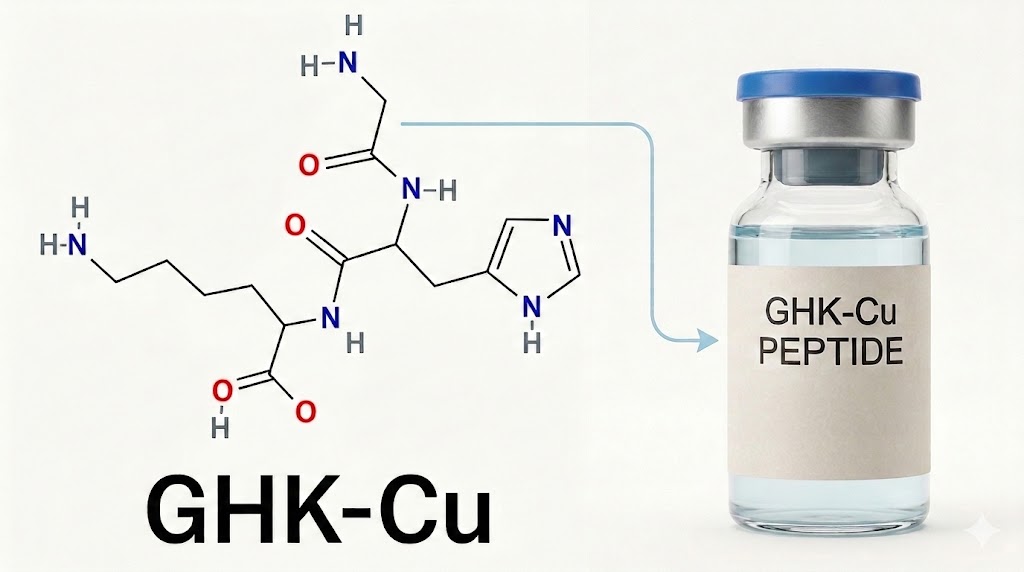
The “Blue Peptide” Phenomena
If you’ve spent any time scrolling through wellness TikTok, reading biohacking blogs, or chatting with your esthetician recently, you have undoubtedly heard about GHK-Cu.
Often called the “Blue Peptide” due to its striking sapphire hue when mixed, or simply the “Glow Molecule,” GHK-Cu has reached a fever pitch in popularity. It has transitioned rapidly from a niche scientific discovery to a mainstream obsession, sitting at the intersection of skin longevity, regenerative medicine, and high-performance recovery protocols.
At Optimize Integrative Health, we prioritize science-backed, regenerative therapies that work with your body’s natural systems. Because GHK-Cu is currently trending—with viral posts discussing everything from “Wolverine Stacking” for injury repair to “gene recoding” for youthful skin—we want to provide our patients with a clear, medical perspective.
Summary of the Viral Buzz
The current obsession with GHK-Cu isn’t just marketing; it’s fueled by remarkable case studies and a new understanding of how it operates at a cellular level.
1. The “Wolverine Stack” & Regenerative Recovery
Viral posts in the biohacking and athletic communities are currently obsessed with the “Wolverine Stack“—a protocol combining GHK-Cu with BPC-157. Named after the Marvel character known for instant healing, this stack is being popularized by tech executives and elite athletes to supercharge the repair of ligaments, tendons, and muscle tissue after injury or intense training.
2. The “Glow Protocol”: Recoding Your Skin’s Genes
In the aesthetics world, GHK-Cu is being heralded as the ultimate “Skin Longevity“ tool. Unlike retinoids that work by causing micro-irritation to force cell turnover, GHK-Cu functions through “repair signaling.” Viral guides frame it as a standard component of a “Glow Protocol,” used after professional procedures like microneedling or lasers to dramatically cut recovery time and enhance collagen synthesis.
3. “Before and After” Visuals
Perhaps the biggest driver of the viral trend is the sheer volume of before-and-after photos flooding social media. Blog posts showcasing 8–12 week transformations often focus on areas notoriously difficult to treat: jawline firmness, “crepy” neck skin, and the smoothing of old scars.
Your Questions Answered
While the hype is exciting, it is crucial to understand the medical reality. Here are the facts regarding the most common questions we receive at Optimize Integrative Health.
1) What is GHK-Cu peptide used for?
GHK-Cu (Glycyl-L-histidyl-L-lysine copper) is a naturally occurring copper complex first identified in human plasma. Its levels decline significantly as we age. In integrative medicine, its primary uses include:
- Skin Regeneration: It is medically proven to tighten loose skin, improve elasticity, and increase the density of the skin by stimulating collagen and elastin.
- Wound and Scar Healing: It accelerates tissue repair by promoting new blood vessel growth (angiogenesis) and increasing stem cell activity at the site of injury.
- Hair Restoration: GHK-Cu is a powerful tool against hair loss. It is used to enlarge hair follicles, inhibit DHT, and improve scalp circulation.
- Systemic Anti-Inflammatory: It has been shown to modulate over 4,000 human genes, essentially shifting DNA expression from a pro-inflammatory “aged” state to a youthful “repair” state.
2) Is GHK-Cu peptide legal?
Yes, but its legal status depends on how it is obtained. GHK-Cu is not a controlled substance.
- Topical Use: You can legally purchase GHK-Cu in over-the-counter serums and creams. These are widely available and completely legal.
- Medical Prescription: As of early 2026, GHK-Cu is available through compounding pharmacies. This means it is legal for a licensed provider at Optimize Integrative Health to prescribe compounded GHK-Cu for injectable or oral use if deemed medically necessary.
- The “Gray Market”: It is not legal to purchase GHK-Cu labeled “For Research Use Only” from online chemical suppliers for human consumption. This bypasses quality control and sterile manufacturing standards.
3) Does GHK-Cu peptide affect testosterone?
GHK-Cu is not a hormone and does not directly boost systemic testosterone levels. However, it can play a supportive role:
- Cellular Support: Preliminary data suggest GHK-Cu may support Leydig cell function (cells that produce testosterone) when they are under stress.
- Synergy: At our practice, we often use GHK-Cu alongside Bioidentical Hormone Replacement Therapy (BHRT) to optimize recovery and vitality, though it is not a replacement for hormone therapy itself.
4) What are the potential downsides to GHK-Cu peptide?
While generally well-tolerated, there are potential downsides:
- Skin Irritation: High concentrations can cause redness or tingling, especially if layered incorrectly with Vitamin C or strong acids.
- The “Copper Blues”: Overuse or excessively high concentrations can paradoxically disrupt collagen organization, leading to temporary skin dullness. Proper dosing is key.
- Metal Allergy: Those with a known copper allergy should avoid it.
- Copper Metabolism Disorders: Patients with rare copper-handling disorders, such as Wilson’s Disease, must consult their specialist before use.
Summary: The Integrative Medical View
GHK-Cu is one of the most promising molecules in regenerative medicine today. Its ability to “flip the switch” on repair genes is profound. However, to achieve the best results safely, it should be used within a supervised, individualized protocol.
If you are interested in exploring GHK-Cu therapy legally and safely, we invite you to schedule a complimentary discovery call with our team. We will assess your overall health and goals to determine if GHK-Cu is the right tool for your journey to vitality.