What Is Insulin Resistance?
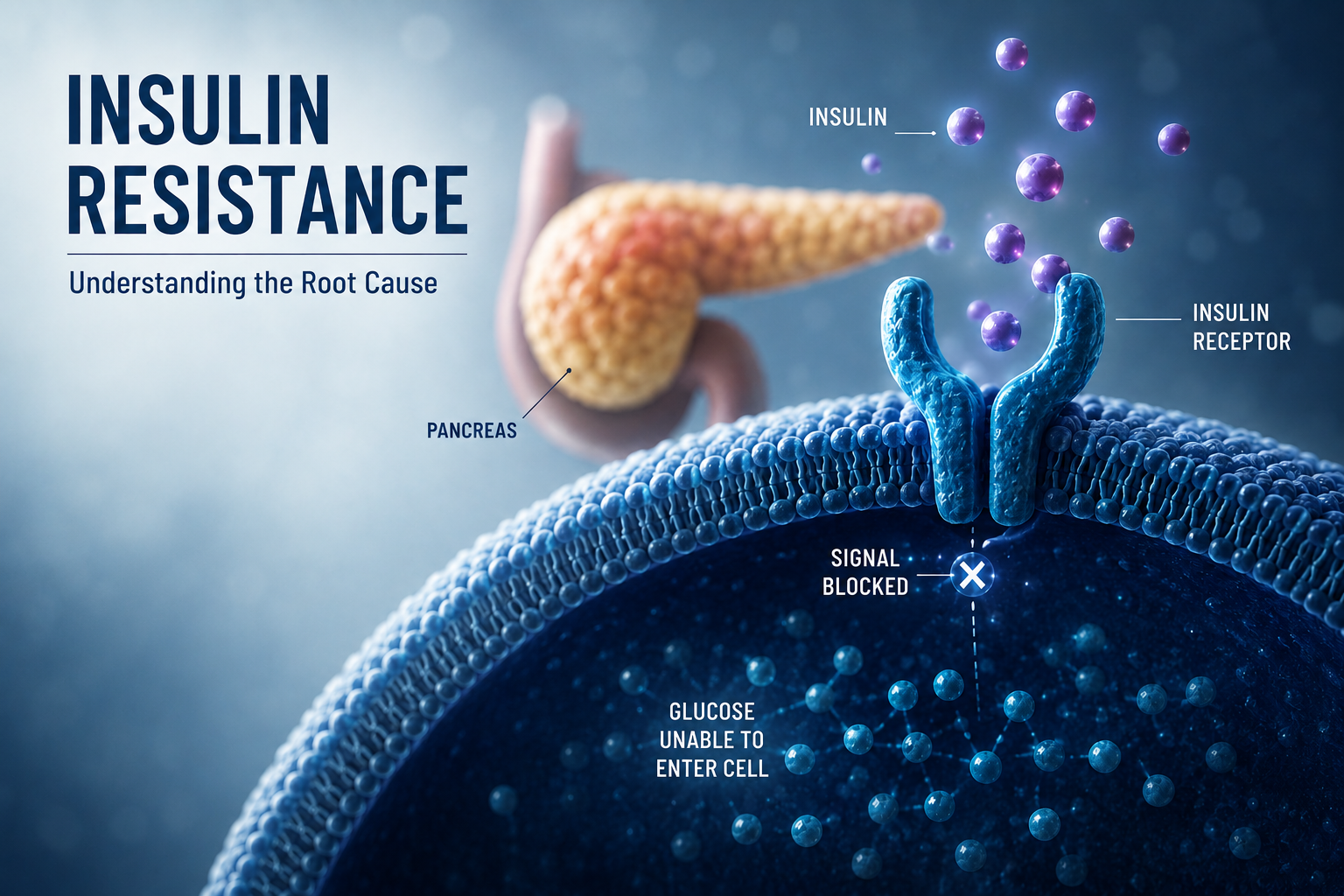
Insulin is a vital hormone produced by your pancreas that acts like a key, unlocking your cells so they can absorb glucose (blood sugar) and convert it into energy.
When you develop insulin resistance, your cells stop responding efficiently to that key. To compensate, your pancreas pumps out increasingly higher amounts of insulin to get glucose into your cells. Eventually, the pancreas can’t keep up, leaving excess glucose circulating in your bloodstream and leading to chronically high blood sugar levels.
Insulin Resistance & Type 2 Diabetes
Left unaddressed, insulin resistance gradually drives blood sugar higher—moving from metabolic dysfunction to pre-diabetes, and ultimately to Type 2 diabetes.
- The Reality of Diabetes: Diabetes remains one of the leading chronic conditions in the U.S., accounting for tens of thousands of deaths annually. The American Diabetes Association notes that diabetes claims more lives each year than breast cancer and AIDS combined.
- The Progression Risk: An estimated 50% of people with insulin resistance or pre-diabetes will progress to full-blown Type 2 diabetes without targeted lifestyle intervention.
An insulin resistance diagnosis doesn’t mean you will automatically develop diabetes, but it does mean your body is signaling for help.
Silent Symptoms and Health Risks
Insulin resistance is notoriously quiet. Most people experience zero noticeable symptoms until the condition advances significantly. As blood sugar levels remain elevated, subtle signs may begin to appear:
- Persistent fatigue and low energy
- Darkened, thickened skin patches (acanthosis nigricans)
- Stubborn abdominal weight gain
- Increased thirst and frequent urination
- Frequent infections or slow healing
- Tingling in the hands or feet
Beyond diabetes, insulin resistance quietly raises your risk for cardiovascular disease and stroke—even if blood sugar isn’t yet in the diabetic range. Because heart disease is the leading cause of death in the U.S., protecting your metabolic health is essential for protecting your heart.
Key Risk Factors: What Drives Insulin Resistance?
Factors Within Your Control:
- Diet & Activity: High-sugar, heavily processed diets combined with a sedentary lifestyle are primary drivers.
- Weight Distribution: Carrying excess weight, particularly around the abdomen, significantly elevates risk.
- Lifestyle Habits: Chronic sleep deprivation, high stress, and smoking impair insulin sensitivity.
- Metabolic Markers: High blood pressure and abnormal cholesterol levels often cluster alongside insulin resistance.
Factors Outside Your Control:
- Age: Risk increases naturally after age 45.
- Genetics & Ethnicity: Family history plays a major role, and certain populations (including Hispanic, Black, Asian, and Native American individuals) face higher baseline risks.
Prevention and Reversal
The best part about catching insulin resistance early is that it is entirely preventable and frequently reversible.
Because early insulin resistance produces few obvious symptoms, specialized lab work is the only reliable way to catch it early. Fasting insulin, HOMA-IR, and comprehensive metabolic markers often highlight imbalances years before standard blood glucose tests flag a problem.
At Optimize Integrative Health, we look beyond basic blood panels to evaluate your full metabolic profile. By combining advanced diagnostics with tailored lifestyle strategies—such as nutrient-dense nutrition, targeted exercise, stress optimization, and restorative sleep—we help you restore insulin sensitivity and prevent chronic disease before it starts.
Take the Next Step for Your Health
Knowing your numbers empowers you to take action long before a mild issue becomes a chronic diagnosis. If you’re ready to optimize your metabolic health and reverse insulin resistance naturally, schedule a discovery call with our team today.